
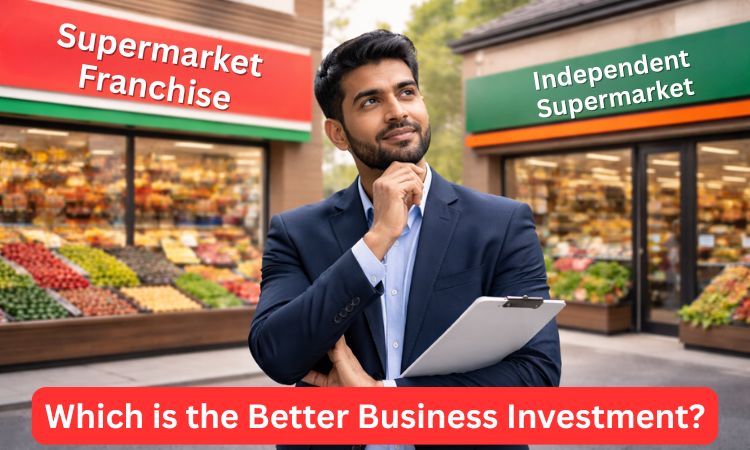
Supermarket Franchise vs Independent Store: Which is the Better Business Investment?
LATEST POST



Drop Us A Message
When you hear about retail, it may sound straightforward; Just find a location, stock products, and start selling. However, in reality, a supermarket’s success actually depends on tight margins, smart inventory buying, supplier credit terms, along with strong backend systems.
That’s exactly why the discussion around Supermarket Franchise vs Independent Store is so essential. It’s not all about ownership; Over and above that, it’s also about structure. A franchise provides centralized sourcing, operational systems, as well as brand recognition. Whereas an independent store gives you full control but full responsibility.
In this blog, we’ll explore startup costs, profit margins, operational demons, supply chain strength, risks, and growth potential, so that you can choose the supermarket business model that fits your investment capacity and long-term goals.
What is a Supermarket Franchise?
A supermarket franchise is actually a business where an entrepreneur operates a grocery store under the name along with a system of an established retail brand. Rather than building the business independently, the investor partners with a brand that already has a proven supermarket business model, operational processes, and market presence.
In this setup, the franchise owner receives the right in order to use the brand identity and follow its retail framework to operate the store. This approach makes the process entirely simple for starting a supermarket business, as numerous operational guidelines and strategies are already developed.
With the advanced growth of organized retail in India, a supermarket franchise business has truly become an attractive investment. It actually allows supermarkets to enter the retail sector with an established structure and build a profitable supermarket in a competitive market.
What is an Independent Supermarket Store?
An independent supermarket store is a grocery business that is fully owned and managed by an individual or a small business owner. In this model, the owner builds the supermarket from the beginning without partnering with a large retail brand or franchise. The store operates under its own name and follows its own business strategies.
The owner is responsible for everything, including store design, product selection, pricing, supplier partnerships, marketing, and daily operations. This gives the owner complete control over how the supermarket runs and how the brand is developed in the local market.
However, running an independent supermarket also means handling all challenges alone. The owner must manage inventory, negotiate with suppliers, maintain quality, and attract customers without the support of an established brand system. Success depends on strong planning, smart purchasing, and good customer service.
Planning to Open a Supermarket or Grocery Store?
Talk to our experts today and get guidance on supermarket setup, store planning, and business growth.
Supermarket Startup Cost: Initial Investment Comparison
When we compare a supermarket market franchise vs an independent store, understanding the supermarket startup cost is really crucial. Here, each model includes different investment structures and operational needs, along with financial planning for entrepreneurs entering the retail sector. Here’s the cost comparison:
Investment Required for a Supermarket Franchise
A supermarket franchise investment generally includes store setups, interior fixtures, billing systems, as well as the initial product inventory. Since the franchise follows an established supermarket business model, entrepreneurs take advantage of predefined processes, supplier access, and operational guidance, which can help streamline the setup and support long-term supermarket profit margin stability.
Investment Required for an Independent Store
On the other hand, starting an independent supermarket store actually needs the entrepreneur in order to manage the whole supermarket startup cost, which generally includes rent, shelving, refrigeration units, inventory procurement, and marketing. Without franchise support, owners must develop their own supermarket business plan, build supplier networks, and establish an identity of a brand to grow a profitable supermarket business.
Also Read This : How to Start A Supermarket Franchise In India
Supermarket Profit Margin and Revenue Opportunities
Understanding the supermarket profit margins and revenue opportunities really helps investors to assess the overall earning potential of a retail store. Supplier network, pricing strategy, customer footfall, and inventory management all play an essential role in determining long-term profitability:
Profit Potential in a Supermarket Franchise
A supermarket franchise business benefits from brand recognition, established supplier networks, as well as a standardized system of pricing. Now, these advantages help attract regular customers and maintain stable supermarket profit margins, and create consistent revenue opportunities for franchise owners.
Profit Potential in an Independent Store
An independent supermarket store provides investors with flexibility in pricing, promotions, and product selection. By comprehending local demand and maintaining strong supplier relationships, owners can build a profitable supermarket business and increase revenue gradually.
Operational Support in the Supermarket Business Model
Smooth operations are essential for running a successful supermarket. Efficient inventory control, staff management, and daily store coordination help maintain product availability and improve the overall customer shopping experience.
Operational Support Provided in a Supermarket Franchise
In a supermarket franchise business, operational systems are typically well structured. Franchise partners frequently receive guidance for store management, staff training, and inventory systems, and this makes it easier to manage daily operations efficiently.
Managing Operations in an Independent Supermarket Store
For an independent supermarket store, the owner manages all operational responsibilities. From supplier coordination to staffing and inventory planning, strong management skills are needed in order to keep the store running efficiently.
Branding and Customer Trust in the Supermarket Business
Customer trust everywhere plays a major role. Shoppers generally like stores that provide them with reliable products, fair pricing, along with a consistent shopping experience.
Franchise Brand Recognition
A supermarket franchise business benefits from an established brand image that customers already know well. This familiarity can help investors attract shoppers quickly and support already steady sales from the early stages.
Building a Brand as an Independent Store
An independent supermarket store must build its reputation gradually. And, consistent service, product quality, and competitive pricing help create customer trust and develop loyal shoppers over time.
Must Read This : Top 15 Most Selling Supermarket Items
Supply Chain Management in the Supermarket
A strong supply chain ensures that supermarkets maintain product availability and control costs. Efficient sourcing and inventory planning also help investors improve supermarket profit margins.
Franchise Supply Chain Benefits
Franchise networks often provide centralized procurement and supplier partnerships. Now, this allows stores to have access to products at competitive prices and ensure consistent stock availability.
Independent Store Supply Management
Independent store owners manage supplier relationships straightforwardly. They must negotiate prices, negotiate with vendors, and handle inventory planning just to ensure products remain available to customers.
Risks and Challenges in Supermarket Business
Every supermarket business investment comes with certain challenges. Market competition, inventory costs, and operational efficiency can influence long-term business performance.
Risks in Supermarket Franchise Investment
A supermarket franchise investment mostly needs following brand policies and operational standards. Although these systems provide structure, they may limit flexibility in pricing or sometimes product selection.
Risks in Independent Supermarket Business
Running an independent supermarket store involves building awareness of brand and supplier networks independently. Owners must handle operational challenges and customer acquisition without even the support of a franchise system.
Planning to Open a Supermarket or Grocery Store?
Talk to our experts today and get guidance on supermarket setup, store planning, and business growth.
Growth Opportunities in the Supermarket Startup Business
The grocery retail industry is being expanded as customer demands for daily essentials grow. Through the right strategy, supermarkets can scale operations and increase revenue over time.
Growth Opportunities in the Franchise Model
The grocery retail industry is being expanded as customer demands for daily essentials grow. Through the right strategy, supermarkets can scale operations and increase revenue over time.
Growth Opportunities for Independent Stores
Independent supermarkets can grow by strengthening their local reputation and customer loyalty. Over time, some stores expand into larger outlets or develop their own regional retail brands.
Supermarket Franchise vs Independent Store: Key Comparison
Feature | Supermarket Franchise | Independent Store |
Brand Recognition | Established brand, trusted by customers | Builds brand from scratch |
Marketing Support | Provided by franchise | Self-managed |
Startup Cost | Higher, franchise fees included | Lower, flexible |
Inventory & Suppliers | Standardized, negotiated by franchise | Independent sourcing |
Operational Guidelines | Strict rules and processes | Flexible, owner-controlled |
Growth Potential | Faster, with franchise backing | Slower, depends on owner effort |
Risk | Lower due to proven model | Higher, dependent on market success |
Key Factors to Consider Before Starting a Supermarket Business
- Location: Select busy locations that are easy to access in order to get more customers.
- Startup Cost Planning: The cost of starting the supermarket is an estimate that should be done well in order to achieve financial stability.
- Business Plan: Prepare an effective supermarket business plan in terms of inventory, pricing, and operations.
- Getting to know Local Demand: Stock items according to the customer preferences and purchasing trends.
- Supplier Management: Grow strong supplier networks to maintain a constant supply.
- Pricing Strategy: Competitive with healthy profit margins.
- Marketing & Branding: local promotions and competent branding should be used to draw and keep customers.
- Customer Service: Emphasis to be placed on high-quality customer service in order to create customer loyalty and repeat business.
Which Option is Better for New Entrepreneurs?
A supermarket franchise business can be a better option for new entrepreneurs. It provides a brand name, operational assistance, and functioning system, decreasing the initial stages of risk. The independent stores offer flexibility, but need more experience, planning, and effort to establish a profitable supermarket business without any foundation.
Conclusion
Deciding between a supermarket franchise vs independent store truly needs careful consideration of investment, operational skills, along with market strategy. Franchises actually provide a ready-made business model and brand trust.
On the other hand, independent stores provide complete control and flexibility. For a guided and growth-oriented approach, partnering with RetailWay can really help entrepreneurs launch a successful supermarket business efficiently and profitably.
FAQs
1. Should I buy a franchise or start my own business?
Buying a franchise gives you brand support, training, and an established system. Starting your own business offers full control and flexibility but requires building everything from scratch.
2. Is a supermarket franchise profitable?
Yes, a supermarket franchise can be profitable if it is in a good location and managed well. Brand recognition and supply chain support often help increase sales.
3. How much investment is required to start a supermarket?
The investment depends on store size, location, and inventory. In India, starting a small to medium supermarket may require around ₹10 lakh to ₹50 lakh or more.
4. Is the supermarket business a good investment in India?
Yes, the supermarket business is considered a good investment because demand for daily groceries and household products remains steady throughout the year.
5. What challenges do independent supermarket owners face?
Independent owners often face challenges such as supplier management, pricing competition, inventory control, and building customer trust without a well-known brand.
6. What are the advantages of owning a supermarket franchise?
A supermarket franchise offers benefits like brand recognition, marketing support, supplier networks, and a proven business model that can reduce business risks.